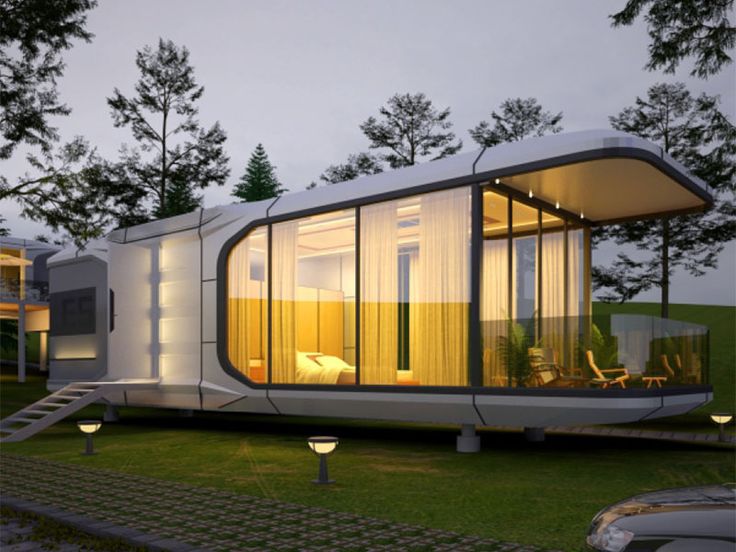
The New Buzz in Housing: Capsule Homes
Scroll through any design feed right now and you will see them: sleek, factory built capsule homes that arrive on a truck and unfold into a finished house in a day or two. They go by many names, capsule homes, expandable homes, prefab or modular homes, but the promise is the same. A complete living space, built in a fraction of the time a normal house takes.
It is a genuinely exciting shift. For decades, building a home in India meant a year or more of dust, labour, and daily supervision. Capsule homes flip that on its head.
But before you decide a capsule home is right for you, it helps to compare it honestly against a traditional built home, on every aspect that actually matters: time, cost, customization, comfort, durability, and resale. At Shree Vaidehi we design and execute interiors for both, so here is our balanced, no hype view.
First, What Exactly Is a Capsule Home?
A capsule home is a living unit built in a factory and delivered to your site mostly finished. Instead of raising walls brick by brick on location, the structure, usually a steel frame with insulated panels, is assembled in controlled conditions, then transported and installed. Some fold or expand on site, some stack together like modules.
Typical features:
- Steel or light gauge frame instead of brick and concrete
- Prefabricated insulated wall and roof panels
- Plumbing and wiring often pre installed
- Delivered in days, installed in hours to a few days
A traditional home, by contrast, is built entirely on site: foundation, RCC structure, brickwork, plaster, and finishes, all raised where it stands, over many months.
1. Construction Time
This is where capsule homes win, clearly.
Capsule home: A basic unit can be delivered and made livable in a few days to a few weeks, depending on size and site preparation.
Traditional home: A standard independent house usually takes 8 to 18 months from foundation to move in, and longer for larger or premium builds.
If speed is your priority, a guest house needed before the wedding season, a farm stay, or a quick office, capsule homes are hard to beat.
2. Cost: The Honest Picture
This is the most misunderstood part, so let us be careful. Prices vary widely by brand, size, finish, and location, so treat these as indicative ranges, not fixed quotes.
Capsule and prefab homes:
- Basic compact units: roughly ₹1,000 to ₹2,000 per sq ft as a package
- Better finish and insulation: ₹2,000 to ₹3,500 per sq ft
- Plus the site costs many people forget: land, a levelled foundation or plinth, transport, crane or installation, and utility connections
Traditional homes (construction only, no land):
- Standard build: roughly ₹1,500 to ₹2,000 per sq ft
- Premium build: ₹2,200 to ₹3,500 per sq ft and up
- Interiors and finishes are separate and depend entirely on your choices
The headline that capsule homes are cheaper is only sometimes true. A small, basic capsule unit can be very economical. But a well finished, insulated, weather ready capsule home in India often lands close to, or even above, a standard traditional build once you add the foundation, transport, and interiors. Where capsule homes reliably save you is time and labour supervision, not always rupees.
3. Customization and Design Freedom
Here traditional homes pull ahead.
Traditional: Almost unlimited. Any layout, any ceiling height, any material, any elevation. You can shape the home around how your family actually lives, a bigger pooja room, a specific kitchen layout, a courtyard for light.
Capsule: You choose from set sizes and layouts. Newer brands offer more options, but you are still working within a module, and structural changes are limited.
This matters more than people expect. A home is lived in for decades, and small layout compromises can nag for years.
4. Interiors: Where Both Still Need You
Whichever route you take, the shell is only half the story. An empty capsule home feels like a smart container until it is furnished, lit, and styled. A traditional home is just civil work until the interiors bring it to life.
In a capsule home, interiors matter even more, because the space is compact. Smart storage, the right lighting, multifunctional furniture, and a considered colour palette are what make a small capsule feel like a warm home instead of a metal box.
In a traditional home, interiors are where your comfort and personality live: woodwork, false ceilings, the modular kitchen, wardrobes, and finishes.
This is the part we handle at Shree Vaidehi for both kinds of homes.
5. Durability and Comfort in Indian Weather
Rajasthan is a real test. Summers cross 45 degrees, and dust and sharp temperature swings are constant.
Traditional homes built with brick and concrete have high thermal mass. They stay cooler for longer and are proven over generations in our climate.
Capsule homes depend heavily on the quality of their insulation. A well insulated unit can be comfortable, but a cheap steel box can turn into an oven in a Jaipur summer and lean hard on air conditioning. Ask pointed questions about the insulation, roof, and cooling before you buy.
On lifespan, a good traditional home lasts generations. Capsule and prefab homes are improving quickly, but longevity depends on the materials and maintenance, and their long term track record in India is still young.
6. Approvals, Financing, and Resale
The unglamorous details that decide a lot.
Approvals: Traditional homes follow the usual municipal and JDA process in Jaipur. Capsule homes can sit in a grey area depending on whether they are treated as permanent structures, so always check local rules before installing one.
Home loans: Banks readily finance traditional homes on owned land. Financing a movable or prefab capsule home is often harder, so many are bought with cash or a personal loan.
Resale: A traditional house on owned land holds and grows value in most Indian markets. Capsule homes, especially movable ones, do not yet have the same resale depth here.
Cost and Trade off Summary
| Aspect | Capsule / Prefab Home | Traditional Home |
|---|---|---|
| Build time | Days to a few weeks | 8 to 18 months |
| Indicative cost per sq ft | ₹1,000 to ₹3,500 plus site costs | ₹1,500 to ₹3,500+ plus interiors |
| Customization | Limited to modules | Almost unlimited |
| Comfort in heat | Depends on insulation | High thermal mass, proven |
| Approvals and loans | Often tricky | Standard and easy |
| Resale in India | Still developing | Strong on owned land |
| Best for | Speed, guest houses, offices, farm stays | Permanent family homes |
So Which One Should You Choose?
There is no single winner, only the right fit for your need.
A capsule home makes sense if you want something quick, you need a guest house, farm stay, studio, site office, or a compact second home, and speed matters more to you than full customization.
A traditional home makes sense if this is your long term family home, you want full control over the layout and design, you are financing with a home loan, and you care about resale value on your own land.
For many families in Jaipur, the smartest move is a traditional build for the main home, with capsule or prefab units kept in mind for quick, specific needs.
Whatever you choose, the interiors are what turn a structure into a home you love coming back to. That is the part we would love to help you get right.
FAQs About Capsule Homes vs Traditional Homes
Q: Are capsule homes actually cheaper than traditional homes in India? Sometimes, but not always. A small, basic capsule unit can be very economical, while a well finished, insulated one often costs close to or more than a standard traditional build once you add foundation, transport, and interiors. Capsule homes reliably save time, not always money.
Q: How long does a capsule home take compared to a traditional house? A capsule home can be delivered and made livable in a few days to a few weeks, while a traditional independent house usually takes 8 to 18 months from foundation to move in.
Q: Are capsule homes comfortable in Jaipur's summer heat? Only if they are well insulated. Traditional brick and concrete homes hold up naturally in the heat, whereas a poorly insulated capsule home can get very hot and depend heavily on air conditioning. Always check the insulation and roofing before buying.
Q: Can I get a home loan for a capsule or prefab home? It is harder. Banks readily finance traditional homes on owned land, but movable or prefab capsule homes often fall outside standard home loan rules, so many buyers use cash or a personal loan.
Q: Do capsule homes still need interior design? Absolutely, even more so. Because capsule homes are compact, smart storage, good lighting, and multifunctional furniture are what make them feel like a warm home instead of a box. Both capsule and traditional homes need thoughtful interiors to be truly livable.
Whether you are building traditional or exploring a capsule home, Shree Vaidehi designs and executes interiors that make either one feel like home. Get a free estimate or book a consultation and we will help you plan it right.